Concert Review: Simone Dinnerstein, Baroklyn, Concora Play Bach and Philip Glass at the Naumburg Bandshell
Review from blogcritics.org
Author: Jon Sobel
The 121st season of free classical music concerts at the Naumburg Bandshell in Central Park kicked off with a familiar figure: Brooklyn’s own Simone Dinnerstein. The no. 1-charting pianist directed and performed in a glowing, birdsong-punctuated program of J.S. Bach and Philip Glass.
Dinnerstein, one of our foremost contemporary Bach interpreters, also consistently presents the music of the now 89-year-old Glass. She is not shy about the similarities she sees in the two composers’ work.
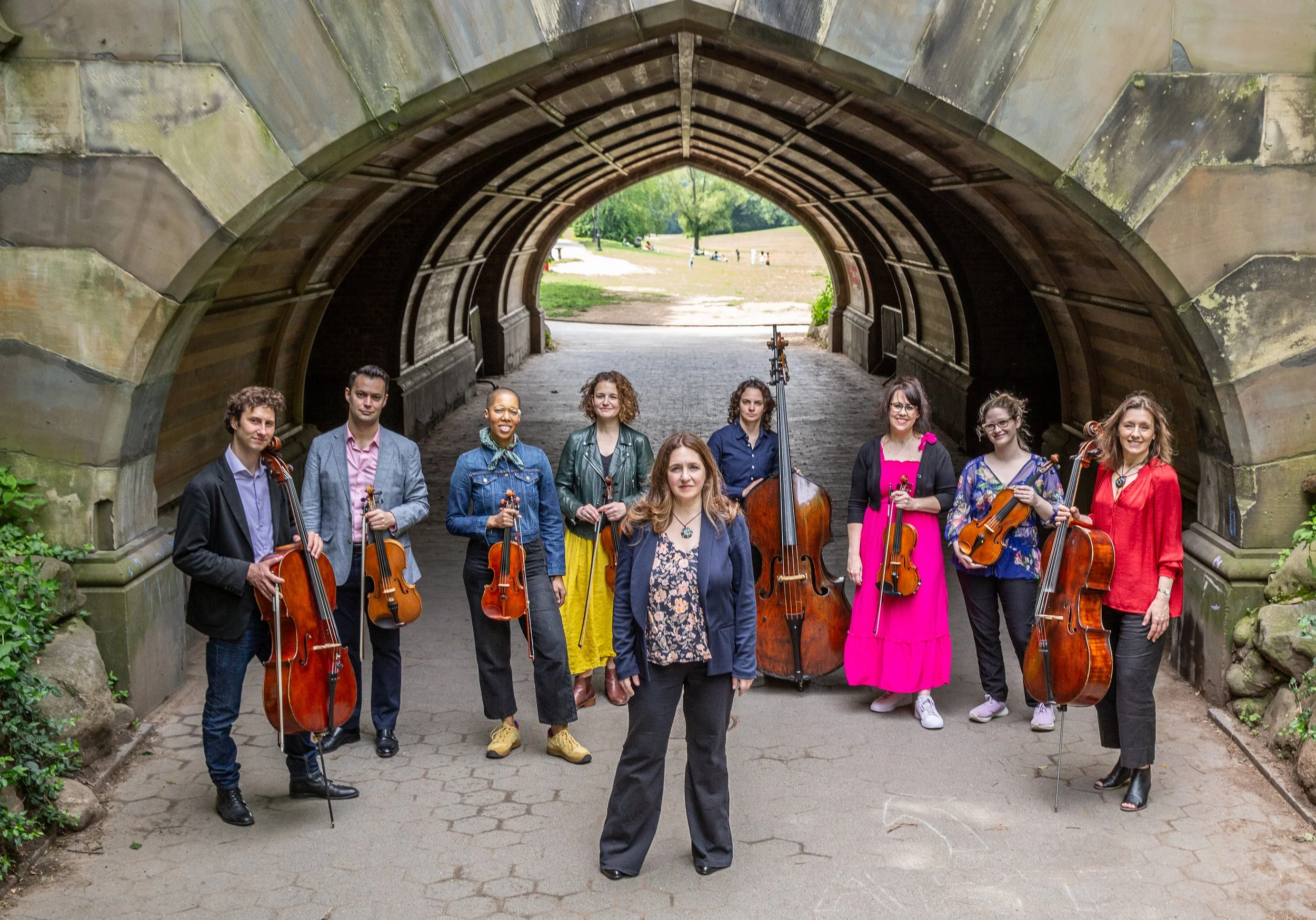
Dinnerstein was joined by Baroklyn, the Bach-focused ensemble she leads, its string players supplemented by flutist Christina Jennings and, on the oboe d’amore, Katherine Needleman. For the cantatas they were joined by the small Connecticut-based choir Concora.
Simone Dinnerstein: Bach with Clarity and Freedom
Simone Dinnerstein plays Bach’s keyboard music with a distinctive rhythmic and dynamic élan, basking in a freedom that she can (more impressively) sustain, within limits, with the ensemble. This was clear from the opening selection, an arrangement for piano and strings of “Herr Gott, nun schleuss den Himmel auf,” a piece Bach wrote for organ. Dinnerstein led with beautiful right-hand rhythmic flow.
Happily, the sound mix – always a challenge in this kind of wide-open outdoor setting – made a nice pocket of space for the continuo, played on the bass by Marguerite Cox in unison with Dinnerstein’s left hand. Cox was an unheralded star of the whole Bach part of the program.
The biggest chunk of Bach was the Cantata No. 9 (with new continuo realizations by Philip Lasser). The program also included three movements from other cantatas. When not playing the piano, Dinnerstein conducted like a dancer, with almost palpable joy.
The cantatas featured fine work from all the musicians and especially the winds. The Concora singers, numbering just 16 (four to a part), sounded strong and well balanced. Baritone Jermaine Woodard, Jr. excelled in the recitatives. Tenor Jack A. Pott and concertmaster Rebecca Fischer were outstanding in the aria. The duet, sung with warmth and precision by mezzo-soprano Megan Roth and soprano Louise Fateux, also foregrounded the talents of oboist Needleman and, again, bassist Cox.
Glass Outdoors
Dinnerstein and the instrumentalists performed a Michael Riesman arrangement of Philip Glass’ Suite from The Hours with similar feeling and skill. Glass’s music speaks to certain eminently talented people, Simone Dinnerstein prominent among them, in ways it has never spoken to me. I get bored and impatient with it sometimes. The many shifts in tempo and figuration in these three movements do sustain interest, but for me only at a moderato level.
That said, Dinnerstein and the ensemble infused the music with smoothly articulated dynamics, ebb and flow, tension and release. Movement I became almost fiery. The slower Movement II sounded modestly sentimental. Movement III included polyrhythms that added interest.
Still, to my brain, most of this suite feels more like an accompanying score than freestanding music. Dinnerstein is absolutely correct that both Bach and Glass write (wrote) malleable music that’s intricate and polyphonic and doesn’t “depend on the physicality of a particular instrument.” Glass’s music, she also writes, is “multi-linear in a way that evokes the music of Bach,” and I’m happy to grant her that too.
Yet Bach stands preeminent. Arrange him as you will. Amplify him electronically for the outdoors. Even turn a favorite tune into a new beast entirely: The concert closed with a creation by Lasser synchronizing the “Air on a G String” with a new, complementary piano part, which stopped just short of over-the-top and brought one of the evening’s many smiles to my face. Do what you will, it’s still J.S. Bach, and no one comes close.